

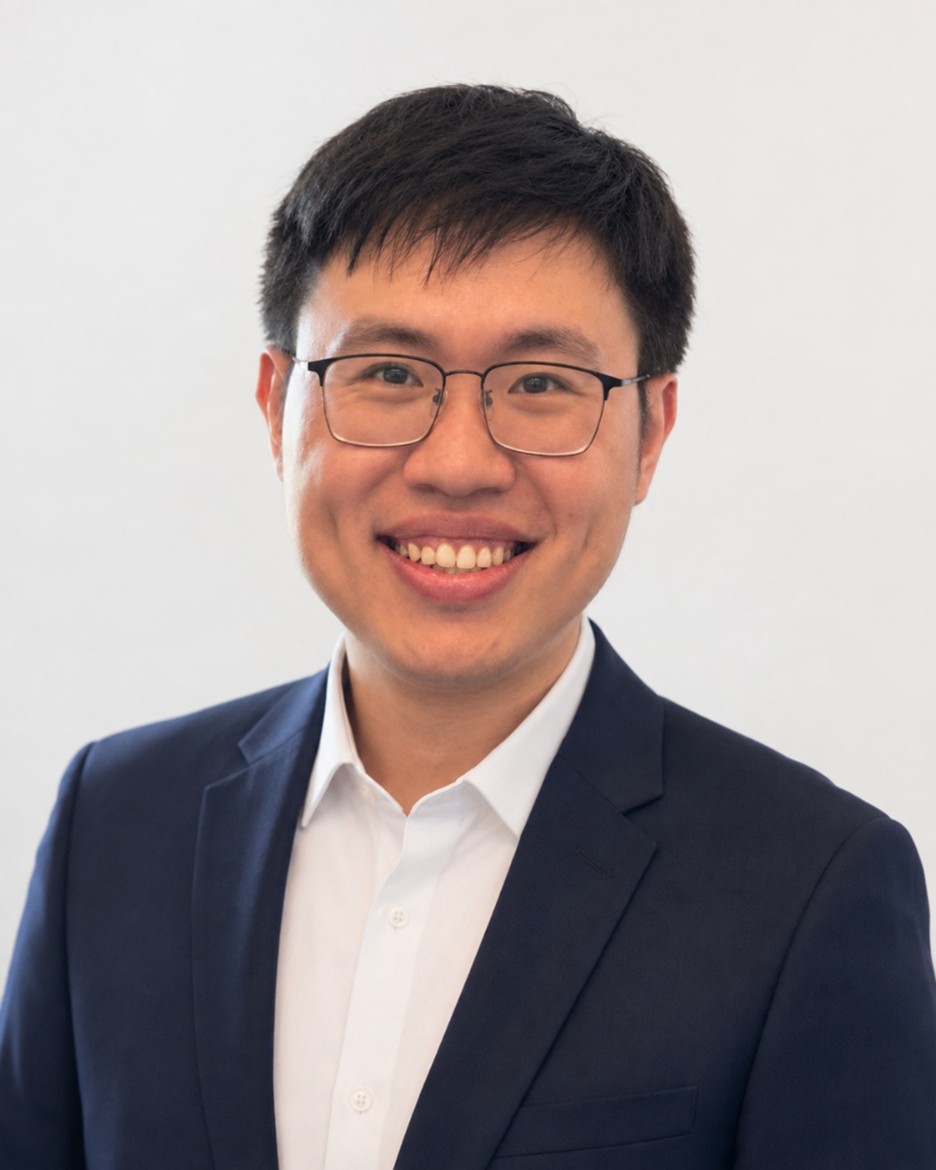
Tianyu LIU
Assistant Professor (incoming)
AI for Science (primarily in biology, chemistry, and healthcare)
 Education/Work Experience
September 2018–June 2022: Earned a Bachelor of Engineering degree from Zhejiang University
September 2018–May 2022: Earned a Bachelor of Science degree from the University of Illinois at Urbana-Champaign
August 2022–May 2026: Earned a Ph.D. from Yale University
June 2026–December 2026: Worked at Alibaba as a Researcher
February 2027: Scheduled to join the School of Artificial Intelligence at Tsinghua University as an Assistant Professor
Research Directions
I am currently building a team focused on cutting-edge problems in AI for Science (primarily in biology, chemistry, and healthcare), including but not limited to:
• AI-based agents serving as AI co-scientists or scientists (e.g., SAGA, Hygieia, etc.)
• Multimodal AI (e.g., scELMo, spEMO, UNICORN, etc.)
• Training foundation models at various stages (pre-training, mid-training, and post-training; e.g., TeamPath, BAITSAO, etc.)
• Data-driven scientific discovery (e.g., spVelo, dGTEx, etc.).
My research interests are always grounded in specific scientific problems, and I utilize advanced technological methods to develop approaches to solving them. By collaborating with experts such as physicians and biologists, we can rapidly apply the productivity gains enabled by AI to address challenges that were previously difficult to tackle. At the same time, I also hope to leverage scientific knowledge to correct existing biases in AI and address its vulnerabilities, thereby achieving a logical closed loop between the application of prior knowledge and the discovery of new knowledge.
Selected Achievements
In terms of academic contributions, I have helped develop a series of artificial intelligence models for biomedical research and discovery. Through collaborations with institutions such as Yale University, Stanford University, Harvard University, the Technical University of Munich, and Genentech, I have continuously conducted interdisciplinary research on various types of scientific data, achieving multiple peer-reviewed accomplishments and contributing to the construction and development of scientific intelligence systems across multiple fields and at multiple levels. As a lead author, I have published articles in renowned journals across multiple scientific fields (such as *Nature Biomedical Engineering*, *Nature Communications*, *Cell Systems*, *Patterns*, *NPJ Digital Medicine*, and *NPJ Artificial Intelligence*) as well as at flagship AI conferences (such as NeurIPS, ICML, and EMNLP). These works have been widely recognized and adopted by the research communities in drug discovery and biomedicine, and have also been featured by Yale University, the National Science Foundation, and prominent media outlets such as *The Pathology News*. The models I developed during my internship at Genentech have been integrated into the company’s drug discovery pipeline, thereby continuously empowering the workflows required for drug discovery. I have also helped organize several key conferences and courses in the field, such as the New England NLP Meeting, the ICML 2026 GenBio Workshop, and the ACM MM Tutorial, making active contributions to the advancement of the field.
Representative Work
1. spEMO (Nature Biomedical Engineering 2026) extends the capabilities of foundational models to spatial multi-omics by combining pathological images, spatial transcriptomics, and the prior knowledge of language models for spatial biological analysis at the tissue level.
2. SAGA (Arxiv 2026) proposes a two-layer agent framework in which an outer-layer LLM agent automatically formulates, implements, and iteratively optimizes the objective function, while the inner layer solves the problem based on the current objective. This approach mitigates “reward hacking” caused by fixed objectives and proves effective across four task categories: antibiotic design, inorganic materials, functional DNA sequences, and chemical engineering processes.
3. TeamPath (Nature Communications 2026) A multimodal computational pathology agent system that uses a dynamic router to adaptively select inference strategies—such as supervised fine-tuning, reinforcement learning, and test-time scaling—based on task complexity. It uniformly processes whole-slide images and local pathological regions to enable pathology question-answering, image description, disease diagnosis, diagnostic error correction, and spatial transcriptomics prediction. Its clinical reasoning and diagnostic assistance capabilities have been validated through evaluation by pathology experts.