


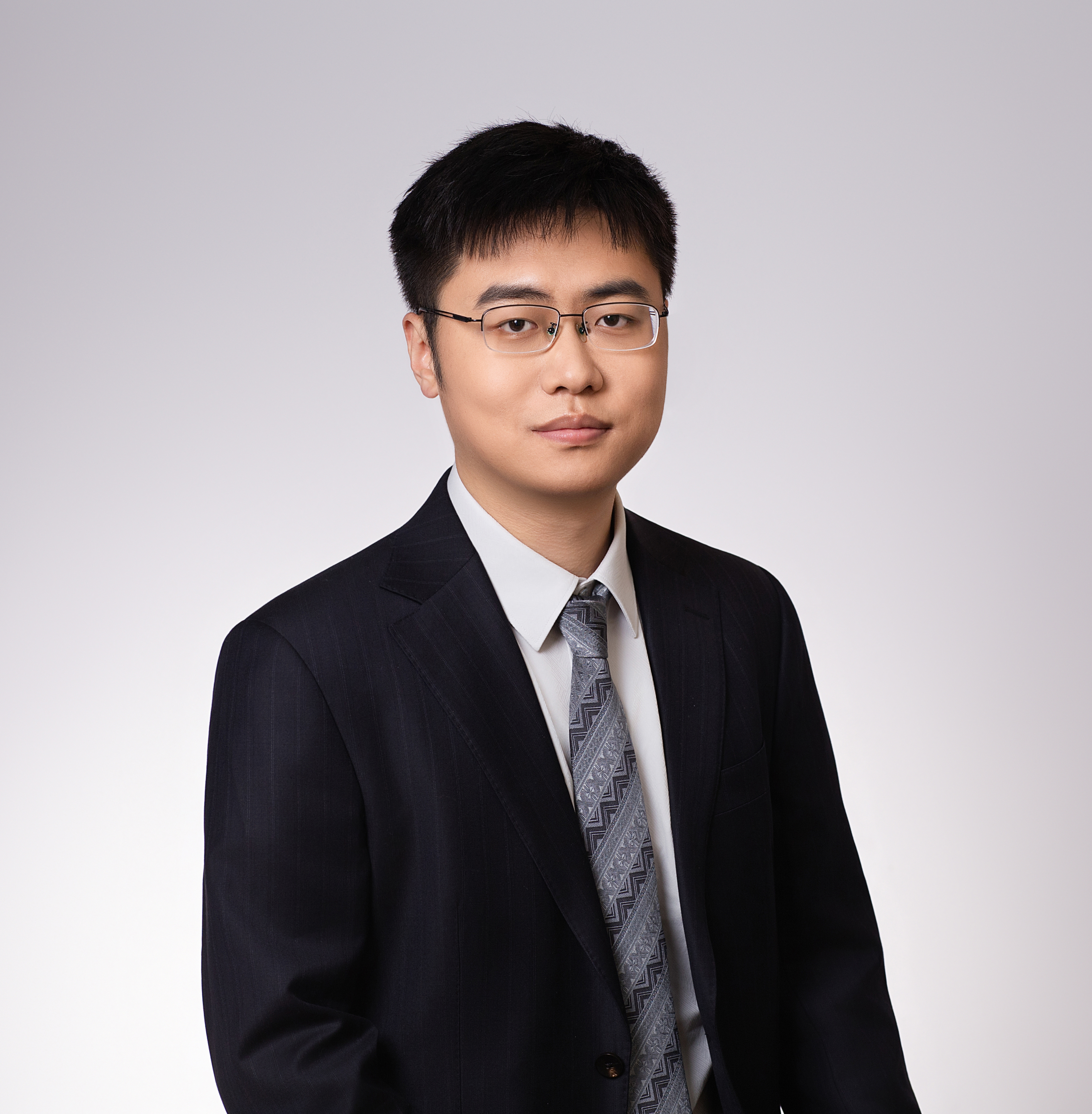
Tonghan WANG
Assistant Professor
(Multi-)Agent and Their Economics
 Education/Work Experience
2025:Ph.D.in Computer Science from Harvard University;Advised by Professors David C. Parkes and Milind Tambe.
2021:M.S. in Computer Science from Tsinghua University,Institute for Interdisciplinary Information Sciences (IIIS).
Research Directions
The future will be a world in which humans and AI agents coexist. My work aims to study and resolve the relational challenges between humans and AI that will emerge during the transition to this world—including (generative) AI economics, whether such relationships admit formal safety guarantees, and underlying AI decision-making problems.
Current research topics include:
1. Generative advertising
2. Human–AI game theory
3. Deep learning methods for microeconomic problems with provable guarantees
4. Reinforcement learning, especially muscle-synergy coordination for embodied agents
Representative Works
1. AI + Economics. We used deep learning to address one of the most fundamental open problems in economics: dominant-strategy incentive-compatible (DSIC) auction theory. Foundational work in this area was recognized with Nobel Prizes. Our paper presented, to our knowledge, the first revenue-maximizing mechanism design framework that strictly guaranteed DSIC and applicable to multi-item, multi-bidder settings.
2. Modular RL. From a multi-agent perspective, we tackled a basic problem in robot control: how to efficiently learn control policies for multi-joint robots. Treating each joint as an agent, we proposed a low-rank control strategy in which multiple joints shared a meta-control signal, thereby achieving human-like muscle synergies in embodied intelligence.
3. Role-Based Multi-Agent RL. We used deep learning to induce a division of labor among agents to enable large-scale cooperation. Our algorithm learned a task decomposition in which each agent adopted a role to solve a subtask; the same agent could switch roles over time. Agents assigned to the same role shared a deep policy network and experience data, improving learning efficiency.