

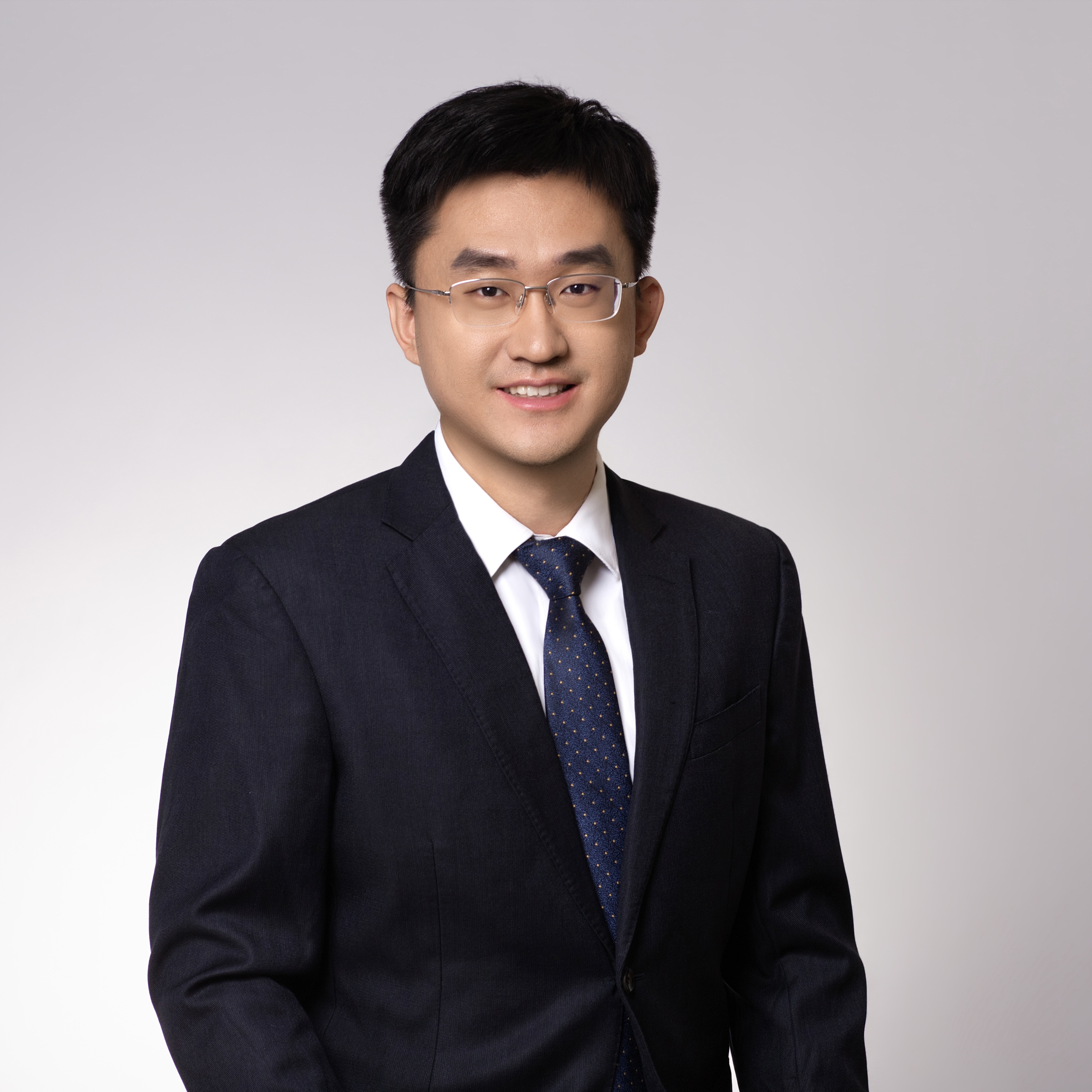
Yuduo GUO
Assistant Professor
Computational imaging,Physics-informed AI,AI for Astronomy
 Education/Work Experience
Sep 2020 – Jul 2024, Ph.D. in Information and Communication Engineering, Tsinghua University
Aug 2024 – Jul 2026, Assistant Research Fellow (Postdoctoral Fellow), Department of Automation, Tsinghua University
Aug 2026 –Present, Assistant Professor, College of AI, Tsinghua University
Research Directions
My research is dedicated to Physics-Informed AI for Science — a paradigm that dissolves the boundary between physical hardware and computational intelligence by embedding fundamental physical laws directly into neural network architectures. By ensuring high fidelity and scientific trustworthiness under extreme observational conditions, and by leveraging AI to co-design next-generation scientific instruments, my group aims to push the detection limits of astronomical telescopes, wavefront sensors, and computational imaging systems beyond what classical physics alone permits.
Specific directions include (but are not limited to):
Direction 1: AI-Driven Physical Sensing
We move beyond the conventional "what you see is what you get" philosophy of instrument design. By building physical frontends optimized directly for AI decoding — rather than for human perception — we increase sensing throughput and redefine the precision ceiling of high-dimensional physical measurement.
Direction 2: Task-Specific Intelligent Scientific Instruments
For problems where general-purpose AI is insufficient, we pursue end-to-end co-design of hardware, algorithms, and scientific data priors tailored to specific observational goals, overcoming classical physical constraints in precisely the parameter spaces that matter most for fundamental discovery.
Direction 3: AI for Astronomy
We are building cross-platform, physics-informed AI models spanning multi-band and multi-messenger astronomical data, with the goal of enhancing data quality at the instrument level, driving autonomous scientific exploration, and establishing a complete pipeline from raw photons to astrophysical discovery — with special emphasis on high-redshift galaxy science and the cosmic epoch of reionization.
Selected Achievements
• Published landmark first-author results in Science, Nature, and Nature Photonics, achieving substantial advances in fundamental scientific problems including astronomical imaging, atmospheric turbulence sensing, and optical aberration correction. Proposed the ASTERIS astronomical AI model, extending the detection limit of the James Webb Space Telescope (JWST) by over one stellar magnitude — equivalent to doubling its aperture. Developed the Meta-imaging sensor and Digital Adaptive Optics, enabling high-precision three-dimensional atmospheric turbulence observation and correction across a field of view exceeding 1,000 arcseconds using an 80 cm ground-based optical telescope. Research covered by national media including CCTV, Xinhua News Agency, and People's Daily.
• PI for the NSFC Young Scientists Fund (C), China Postdoctoral Science Foundation Special Project and General Project, and a national high-technology R&D program. Recipient of the Tsinghua University Shuimu Scholar, Tsinghua University Academic Rising Star (top 10 per year), Beijing Outstanding Graduate, Outstanding Doctoral Dissertation (Tsinghua University & Chinese Institute of Electronics), and the Young Elite Scientists Sponsorship Program, Beijing Association for Science and Technology.
• Serves as reviewer for Nature, IEEE TCSVT, Optica, and Optics Express; Executive Editor for the special issue "Intelligent Optical Astronomical Observation Technology" in Laser & Optoelectronics Progress. Invited speaker at the National Astronomical Observatories, Yunnan Observatories, and Nanjing Institute of Astronomical Optics & Technology. Work recognized by China's Top 10 Optical Breakthroughs and the ICBS Frontiers of Science Award (ESI Highly Cited Paper).
Representative Work
1. ASTERIS: Self-Supervised Spatiotemporal Denoising for Astronomical Imaging · Science 2026
Photon noise from background-limited detection fundamentally constrains the depth of astronomical surveys. ASTERIS introduces a self-supervised spatiotemporal denoising framework requiring no high-SNR reference observations, with an adaptive flux clip mechanism and a multi-scale spatiotemporal receptive field. Applied to JWST imaging, it pushed the telescope's detection limit by over 1.0 magnitude (equivalent to doubling its aperture, 7x photon collection efficiency) and tripled newly identified high-redshift galaxy candidates from the cosmic dawn epoch, yielding the deepest galaxy luminosity function to date. Published as First Release in Science; unanimously praised by reviewers as "an excellent work that will have an important impact across astronomy."
2. Intelligent Meta-Imaging Sensor · Nature 2022
Optical aberrations cause rapid resolution and SNR degradation in complex environments that hardware compensation cannot solve generically. We developed an integrated Meta-imaging sensor embodying incoherent synthetic aperture imaging and digital adaptive optics within a single chip. Deployed at the Xinglong Observatory, it expanded the turbulence-corrected field of view of meter-class telescopes by nearly 1,000x, enabling near-diffraction-limited optical astronomy across a 1,000-arcsecond field. Recognized as one of China's Top 10 Optical Breakthroughs, ICBS Frontiers of Science Award, and ESI Highly Cited Paper.
3. Wide-Field Wavefront Sensor (WISE) · Nature Photonics 2024
Anisoplanatic atmospheric turbulence across a wide field of view has long been an intractable problem for ground-based astronomy. WISE achieved, for the first time, 3D tomographic observation of atmospheric turbulence at 1,100 arcseconds FoV with 10-arcsecond resolution at 30 Hz, and demonstrated high-precision ConvLSTM-based prediction across a 400-arcsecond field. MIT Professor Dirk Englund described it as "state-of-the-art real-time wavefront sensing."