

Beijing AI
Safety Hub
Overview
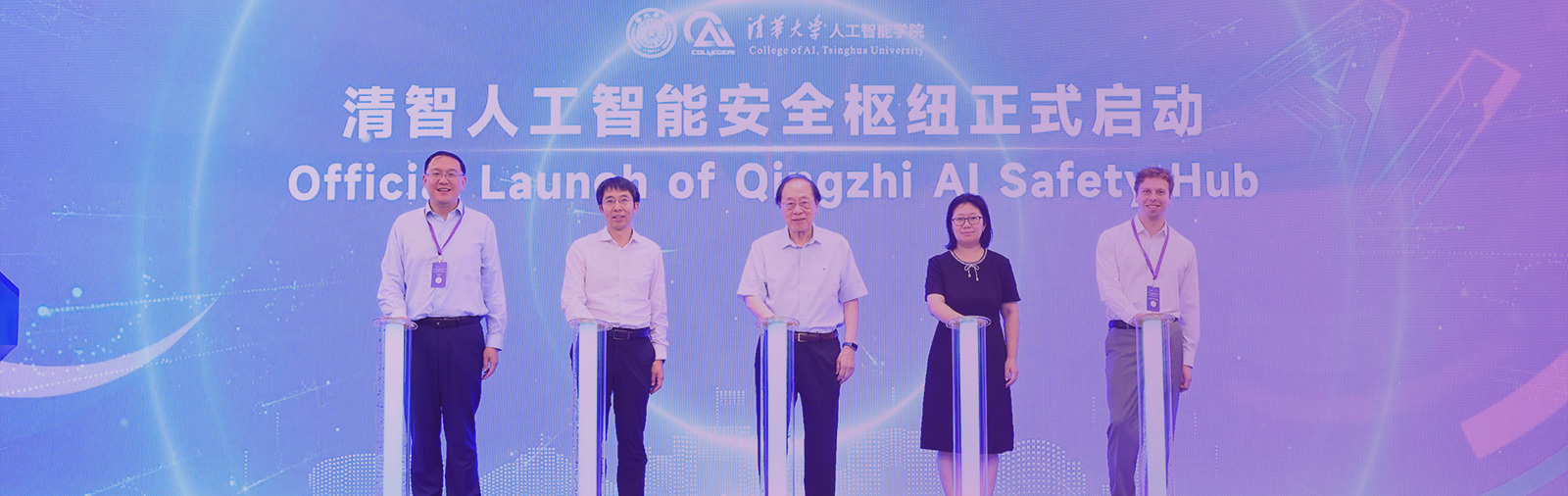
The Beijing AI Safety Hub (BASH) was officially established on July 15, 2026, as a key initiative of Tsinghua University to advance cutting-edge research and international academic exchange in artificial intelligence safety. Focusing on the frontiers of AI safety and risk research, BASH aims to bring together leading researchers from China and abroad, safety teams from AI companies, and relevant research institutions to foster an open, collaborative, interdisciplinary, and internationally connected research community.
Located in the AI Genesis Community in Haidian District, Beijing, the Hub draws on the academic resources of College of AI, Tsinghua University and the surrounding AI industry ecosystem. It provides researchers with shared workspaces, opportunities for academic exchange, and avenues for research collaboration. The Hub is led by Academician Andrew Chi-Chih Yao as Chief Scientist, with Professor Wei Xu and Assistant Professor Sören Mindermann (incoming) serving as Co-Directors. A Program Committee has also been established to provide a governance structure that supports both frontier academic research and effective operations.
BASH focuses on four key areas: shared research spaces, international researcher residency, early-career talent development, and two-way international academic exchange. Through these initiatives, it seeks to promote knowledge sharing, academic collaboration, and talent exchange in AI safety.
Over the next three years, BASH will continue to expand its international collaboration network, deepen partnerships in frontier research, and gradually establish sustainable mechanisms for two-way talent exchange. By 2029, the Hub aims to become an internationally influential center for AI safety research and academic exchange, contributing Chinese expertise and perspectives to global AI safety and governance research.

International Researcher Program
Beijing AI Safety Hub Residency Program is a flagship international academic exchange initiative of BASH. It aims to invite outstanding AI safety researchers from around the world to conduct research in China, advancing the study of critical AI safety challenges through close academic collaboration, interdisciplinary exchange, and shared research resources.
The first residency program officially launched in fall 2026, bringing together researchers from international AI safety research institutions, universities, and related organizations. Research topics include frontier AI risk assessment and loss-of-control risks, model safety evaluations and AI agent monitoring, AI alignment and interpretability, as well as technical governance and AI standards.
During their residency, visiting researchers are provided with shared research and office facilities, along with practical support for daily living, through the resources of College of AI. BASH also organizes academic seminars, research discussions, mentorship connections, and community activities to facilitate interaction between international visitors and faculty members, students, research institutions, and AI safety teams in China. In addition, the Hub plans to organize academic visits to Chinese cities such as Shanghai and Nanjing, further strengthening connections with domestic AI research institutions.
Through the continued development of the Residency Program, BASH seeks to build a sustainable and open international research collaboration network, facilitate in-depth exchanges between Chinese and international researchers on frontier AI safety challenges, and foster a globally connected AI safety research community.

Intern Program
Beijing AI Safety Hub Seed Intern Program is designed for students who aspire to pursue research careers in AI safety. Through faculty mentorship, in-person research experience, and international academic exchange, the program provides early-career researchers with opportunities to engage in cutting-edge AI safety research while developing their research capabilities and global perspectives.
The program is open to undergraduate, master's, and doctoral students in computer science, information-related disciplines, and other relevant fields, both within and outside Tsinghua University. Applications are accepted year-round, and internships are generally expected to last at least three months.
Selected interns may choose a mentor and identify a research topic based on their academic interests. Under the guidance of their mentors, they will participate in research projects and academic activities. During their internships, students will have opportunities to engage in face-to-face discussions with visiting researchers at the Hub and research teams from China and abroad, strengthening their abilities in independent research, academic communication, and interdisciplinary collaboration.
In addition, the program offers outstanding interns who successfully complete their internships opportunities for further international academic exchange. These may include fully funded research visits to overseas AI safety research institutions, helping students broaden their international research perspectives and explore long-term academic career paths.
Overseas Research Program
Beijing AI Safety Hub Seed Fellowship Program aims to support outstanding early-career students who aspire to pursue AI safety research by enabling them to undertake academic exchanges and research placements at overseas research institutions. The program seeks to help emerging researchers broaden their international academic perspectives, engage deeply in frontier research, and establish international research collaboration networks.
The program will select outstanding students for fully funded three-month research visits abroad, with additional living allowances provided. Priority will be given to doctoral students. Applicants are required to submit an English-language CV. BASH will coordinate the selection process and assist successful candidates with applications for overseas research placements.
Leveraging the Hub's international academic collaboration network, the program plans to work with leading universities and AI safety research organizations, including the University of California, Berkeley, the University of Cambridge, the University of Oxford, and Constellation. These collaborations will create opportunities for selected students to participate in internationally leading research, receive academic mentorship, and engage in cross-institutional collaboration.
The Seed Fellowship Program is an important component of BASH's broader efforts to develop AI safety research talent and establish sustainable mechanisms for two-way international academic exchange. By supporting young Chinese researchers in engaging with the international research frontier, the Hub aims to further promote knowledge sharing and long-term collaboration between Chinese and international research teams, strengthen students' capabilities in international academic communication and research innovation, and cultivate outstanding AI safety researchers with global perspectives.